Sunday, June 06, 2010

Character Demystified


My friend and I had gotten into a debate as to what was more important, story or character. For awhile we made our arguments as to which was more important. In the end it was obvious. A good movie, book or whatever has shining examples of what good characters are like.
Good characters are like the last bite of sundae. Its good all the way til the end then you realize its over, yet you feel satisfied. Maybe I'm over exaggerating but there's something magical about creating great characters that pop up from the screen or out of a book. Its something writers, deal with everyday yet its one of the most difficult to do right because of so many factors to take into consideration.

How do you know your character is interesting?

Its all about conflict. The more conflict a character comes into the more we want to know what happens to them. These problems are not random, in fact a good writer will make sure that conflict comes from the characters own faults.


Ex.A businessman who is struggling financially will have different types of problems all of them requiring different ways of solving these problem.In the fight club, the main character played by Edward Norton.

The protagonist (name unknown)is bored with his life(conflict) which carries over into his home life, work life which leads him down a road self deprecation.

So conflict comes from the decisions a character makes or external problems that impede into the character's life. In order to resolve these issues the character does something opposite of what he would normally do and entails not only different way of thinking but allows the character to grow which interesting to watch.

As a society we like progress. We love to see the underdog go against the odds. Its embedded in our culture. So when we see a natural progression happen before our eyes its magical and truth revealing. This is the essence of story when you can bring the audience into a journey.

There's more to this but I want to save it for another post.

Thursday, April 29, 2010

Character Arch revealed

Recently I ran across a site that talked about 5 steps that people go through after losing a job. I was amazed that coincided with the 5 steps of grief which also happens to excellent method of understanding character arch.
Now this is just an example of what someone would go through after losing something of importance. The key here is how each emotion differs from one another.
This is similar to character in a story. Of course in modern storytelling it is often difficult to portray true change especially for a generation of jaded folkCharacter arch is not deliberate and requires that the writer had some experience in their own life or have researched. This is where writing a character arch becomes tough because many times in real life people avoid pain at all costs. So when someone writes character going through a significant change the audience is slightly on the fence because it doesn't ring true and it doesn't reveal any insight on life.
I recently watched the film, On the Waterfront starring Marlon Brando who gives a really good performance as a ex prize fighter who works as a shoreman. The movie does a great job in showing Brando's character by pitting him against forces that he believes he can't possible defeat.
People change not because of other people but because they want to and they have to. They change because the current frame of mind isn't solving their problems and now they will have to adapt and find a new course to follow. This is the kind of character arch is tricky because it demands that the audience relate to the character as true and credible. Most stories take a short cut and give the character a revelation that isn't all that profound or unique.


The New Alice in Wonderland directed by Tim Burton is perfect of example of quick revelation and instant epiphany. Wonderland starts off as Alice is miserable becauset she has to marry a a guy she doesn't love. So she runs off because that's what women do when they don't want to marry someone. Without giving too much away, Alice's revelation comes a fourth of a way in the film, her epiphany comes much later but it doesn't matter because it becomes difficult to believe this character because the writer wasn't sure what he wanted us to feel about her. Her character arch was dull and it couldn't deliver anything in the way of a new mindset that will change her life. No instead we're left scratching our heads as to what the character wanted. This isn't indepth review of the movie, I'm just using as an example.

Character Arc demands that the character go through a thinking process that people can relate to and that process is disrupted when unanticipated problem arises and pushes the character out of their comfort zone.
I reminded of something I heard about personal change. The moment that a person decides to change is when the river of life engulfs them and they have to figure out how to swim.

Sunday, April 04, 2010

story structure


After reading Dramatica and devouring Robert Mckee's book entitled Story and not to mention John Truby's book, Anatomy of story; I think the most solid structure in storytelling is the Argumentative style of storytelling. Dramatica details most of this in the free downloadable book. http://www.dramatica.com/theory/theory_book/dtb.html

The Argumentative style is the most prominent in all the best movies and television. It is only second to the hero's journey which was made famous by the Star Wars franchise, however Argumentative style isn't really fascinating like Hero's journey. In fact its the opposite. Hero's journey structure deals with the lone hero and his fight against tyranny which is fun. The Argumentative style deals with the character's weakness and delves into those the problems related to that weakness..huh?...yawn!

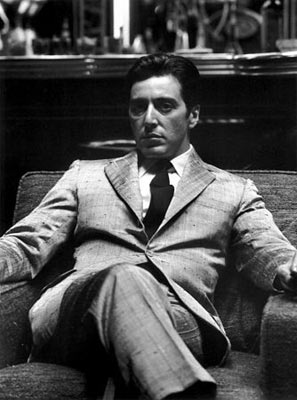
A good example would be in GodfatherII. Michael is determined to reign supreme by eliminating all opposition. By the end we see what Michael has given into weakness. He has become the very thing he was opposed to and now he has become the devil in a three piece suit.

Argumentative style deals with internal tickerin's of the character and Hero's Journey deals with the external. I'll talk more about this in later posts. It gets pretty deep and I'm tired. See ya.

Wow, haven't been here for awhile

Well the blog has been on hiatus for awhile and for good reason. Many things have changed including the cancellation of story kebab. It was good while it lasted but I decided to move on. So I also decided to take the knowledge of my story and post things online directly related to it. Not that anyone would care to read it, but I feel like story in mainstream is slowly dying out. What's worse it seems that it is acceptable.
The only company that is got it right is Pixar and its amazing to see them put all their focus onto story. It's humbling to hear Pete Doctor talk about how long they work out the story, (which takes usually about 2-3 years). Pete Doctor just won animated feature of year award at the Academy Awards. Personally I thought UP was just fairly okay film. It wasn't anything extraordinary or brilliant, but because the competition is lagging Pixar won again.

Sunday, November 02, 2008

NaNoWriMo 2008

It's here! The perfect opportunity to stretch your creative literary legs. National Novel Writing Month goes on for the entire month of November. The goal: to write a 50,000 word novel in only one month. It may sound like a lot of work, because it is, but it isn't impossible. If you do the math, your quota is about 3 single spaced pages a day.

The rules (basically):
1. Start fresh with something you DON'T have any previous written progress.
2. Write fiction, so your imagination gets a workout.
3. Just write and write, don't worry if it's good writing. Revision is death!
4. Copying and pasting the same word 50,000 times doesn't count, you fucking cheater.
5. Have fun and try not to go insane.

Monday, October 06, 2008

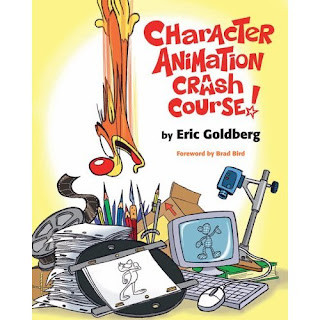
Character Animation Crash Course!

If you’re interested in taking your animation skills to the next level, Eric Goldberg’s book is perfect. It’s packed with lots of information on character construction, staging, composition and it comes with a CD. The book is light but heavy with content. It’s an easy read. However this is not for beginners, its loaded with examples that require a basic level of understanding of animation. This is a book every animator should have on their bookshelf. Pick it up at Amazon. Most bookstores probably won’t have it in stock and buying online is cheaper.


-Demetre

Story Ka-Zine Issue #2 Call for Submissions


Here it is! Story Ka-Zine issue numero dos! It's the art zine made by Ai Inland Empire students to promote our own art as well as the art of anyone else. We plan on making this one bigger and better than the last so get creating. There's plenty of time until the dead line in November so get started and make something amazing.

The phrase for issue #2 is
Alien Sushi

- Final print size is 5.5 x 8.5"
- All artwork must be scanned at 300 dpi
- Jpeg format
- Short stories are limited to two (2) 5.5x8.5" pages
- Use no smaller than a 9pt readable font on short stories
- Grayscale or black and white artwork only
- DEAD LINE is NOV. 29th

Send your submissions and questions to storykabob@live.com

Remember that the phrase "Alien Sushi" is your starting point. Interpret it however you want, but think outside the box. Wait! Just kill the box all together and go crazy!


-Dustin

Thursday, September 04, 2008

Story Ka-Zine and One Way to Unblock Those Blasted Mind Blocks

Story Ka-Zine issue one sold out! People loved it. There were a lot of comments on how great it looked and that they didn't want to take it out of the packaging. I have to thank Demetre for all the support and Mike Meave for his layout work. Johnne saved me lots of work over the weekend by helping with the folding and putting them all together. And of course thanks to everyone who submitted work. This issue was really rushed, but it was a great beginning and is leading towards greater things. I personally can't wait for issue 2.

We began discussing possibilities for issue #2 yesterday in Story Kabob and it will be coming out towards the end of Fall quarter. As soon as things are ironed out we'll post so watch closely. Remember that submissions are open to everyone; students, staff, and civilians (anyone outside of beloved Ai-Inland Empire community).

Along with Story Ka-Zine we also discussed our stories. I was stuck on the middle section of my story and Demetre decided to use me to teach us all a lesson. After briefly describing my known plot points he had everyone start throwing out ideas as to where the story could go. There were many crazy and bizarre ideas thrown out but his point was proven and I gained some insight into my story. Demetre's point, well I should say the point that I picked up on (I could have very easily missed his point entirely) was that when you're stuck let your mind go and just think of any and all possibilities regardless of how insane they might be. From there you can pick and choose and shape your story accordingly.

That's all for now. I'll post some pictures when I get a hold of some. Peace out.

-Dustin

Oh, I thought it would be appropriate to list all those featured in Issue #1 of Story Ka-Zine. Here they are.

Niles White
Taber Dunipace
Johnne Tyson
Vince Molina
Jake Castorena
Jon Vazquez
Carlos Galvez
Drifting Eddy
V.
Mark Carino
Dustin Glauser
And thanks to my buddy Samson for the intro.

Friday, August 15, 2008

Story Ka-Zine Issue # 1 Submission Info

Hey Everyone,
Issue # 1 of Story Ka-Zine is going to be coming out at the end of this quarter! We are really excited! But unless your one of five people at Ai Inland Empire you haven't heard anything about Story Ka-Zine. What we're doing is producing a zine based around Themed Imagination. This is where you are given a theme (or phrase, or idea, or sentence, etc.) and you use your imagination to interpret it artistically. Pretty simple stuff and incredibly fun. Submissions can be illustrations, graphic art, photography, or short stories.

Here's what you need to know to submit your work for consideration:

- The phrase for Issue #1 is
MONDO POTASSIUM

- Black and white artwork only
- Dimensions are 5.25 x 8.25" (1575 x 2475 pixels)
- Must be a scanned .jpg at 300 dpi

- The Dead Line Has Changed!

All Submissions must be received by Friday August 29th

For any and all Submissions and questions please email
storykabob@live.com - include name and contact info.


-Dustin

Wednesday, August 13, 2008

Last Week's Meetin' (8/6/08)

Last weeks meeting was a good one. Johnne and I received some good advice on our ideas. When we were discussing the story idea that I'd presented it was suggested that any main villian would need to be the direct opposite of my hero. What this would do is make for great conflict. Stories are all about conflict. If there is no conflict then where's the story? John Truby reveals how much conflict plays a part in story telling in his seven steps (check out the post Classical Structure under Previous Posts).
Besides discussing story structure and ideas we also talked about things we could do as a club. Demetre realized that we have a quarterly budget that we need to use. Aaron brought up the idea of using some of it to purchase small items for some of the classrooms. An example would be small mirrors for each desk of the animation room. Another idea was to produce a zine. I've been thinking about different ways in which we could present it to the public (the public being the school) and will see what everyone thinks about my ideas today. Right now we know that it will be 5.5 x 11" and black and white. I'm really excited about it and want to get issue # 1 out as soon as we can.
That's it for now. We meet again today and every Wednesday at 4:30 in the animation room. Peace out!

-Dustin

Monday, July 21, 2008

Some Things to Remember When Presenting

When presenting an IDEA, tell us:
- What is the "Hook" for your idea
- Who is the main character
- What do they want
- Where/when does it take place
- When first presenting an idea there isn't a need to elaborate on the back-story or the history of your stories world. Just the basics.

When presenting a STORY, tell us:
- Present a particular scene in your story using only action, dialogue and brief description
- Do NOT explain back-story or history
- Do NOT go off track and explain other things happening in the story which we cannot experience in this one particular scene
- Act it out! If you really get into your scene, we'll get into it too.

When presenting ARTWORK:
- Try to show us the artwork without explanation at first and just allow the audience to experience the work the way they would if you weren't there
- If showing thumbnails or rough ideas, explain what the idea is and how you plan to achieve your goal
- Unfinished work is absolutely welcome!

-Dustin

Saturday, July 19, 2008

Story Kebab Summer 2008

Welcome to the Summer quarter of Story Kebab. We are meeting on Wednesdays from 4:30 to 6:00pm in the animation room. From what I understand, I will be the primary spokesman for the blog this quarter. I will be posting tips and methods that will help us all better understand the difficult art of story telling.

Some of the best ways to grow as an artist are to critique and be critiqued as well as collaborate and brainstorm. That is what Story Kebab is about. We promote and expect positive feedback and ideas. No idea is a bad idea. We hope to see you there.

-Dustin

Monday, January 14, 2008

Script Writing Format

Hey guys, if you ever want to write a script, you'll need to know how to format it. Here are a couple links to help any would-be screen writers out there!

This one is for margins:
http://www.scriptwritingsecrets.com/Film_format.htm

This one is a bit confusing but suggests font and size:
http://www.simplyscripts.com/WR_format.html

And this is the mother site of the online book I'm getting this info from:
http://www.scriptwritingsecrets.com/contents.htm

Enjoy and see you guys at the club, 4:30 on Wednessdays in the Animation Lab!

Wednesday, January 09, 2008

Welcome!

Welcome new members and old to the Winter quarter of Story Kebab! We'll be doing mostly creative writing exercises this term, so be sure to post up your work here or bring it to class with you. Hope you enjoy the club and be sure to drag your friends along once in a while!

Monday, October 29, 2007

Classical Structure

Here are the notes for Classical Structure for stories by John Truby:

Classical structure deals with story structure that has been widely used throughout the ages. It deals with basic problems and situations that ordinary people deal with everyday. Thus making it universal for all to understand and a building block if one wishes to write well crafted stories. The great stories of our time are written by writers who knew classical structure so well that they could deviate or throw out all the rules altogether. Lastly the classical structure reflects life. It is life. Most everyone on earth can relate to it. Since our entertainment has been dumbed down for the masses it’s especially important to create something meaningful and relevant.

Problem need- At the beginning of the story, the hero is in trouble. He is aware of his problem but he doesn’t know how to fix it. There is something missing within the hero, which he must fulfill. The hero’s need is to overcome that weakness.

Desire- The character creates a goal based on the need.

Ex. A lion is hungry (need). He hunts prey (desire) to fill his hunger (need).

Opponent- Someone wants the same thing as the hero.

Plan-Set of guidelines the hero follows in order to win.

The Battle- The final conflict in which the ultimate test to see whether or not the hero wins. This battle is so brutal that the hero undergoes change which leads to the self revelation.

Self Revelation- The hero learns something fundamental about who he is. He will now learn the proper way to act in this world.


Expanded Classic Structure


Ghost- Is the event from the past still haunting your hero. The ghost is typically part of the need for the hero. It is also the internal opponent for the hero. The ghost is also the great fear of your hero.

Inciting incident- An event that occurs outside (world), that which causes the hero to come up with a goal to take action.

Training- The hero learns what he needs in order to reach his goal.

Towards the middle of the story the hero must become obsessed about reaching their goal. If the hero isn’t obsessed about reaching their goal, then the audience won’t care either.

Apparent Defeat- In the middle of the story the hero comes into conflict with the opponent but he’s losing. The hero begins to believe he’s been beat. The hero is at his lowest point.

Note: Since it is only an apparent defeat, the hero receives some information that leads him back to pursue his goal to which the conflict continues. And as the conflict intensifies between the hero and the opponent, the pressure on the hero intensifies. The hero’s options decrease.

Double Reversal- Not found in many stories only in great stories, will the opponent will have a self revelation. The hero learns something from the opponent and opponent learns something from the hero which is a blend of the writer’s view of a proper way to live in the world.

Cutting the classical structure in half

In simpler stories there are heroes that are enslaved in beginning of the story, then goes through a struggle, because of that struggle and by the end of the story, the hero receives freedom.
Part of that slavery is self imposed. He is enslaved because of his lack of understanding of who he is.


Review- Classical structure is the basis for storytelling and includes:

Problem need-Need of the character.
Desire- The hero’s goal
Opponent- Usually wants the same thing as the hero
Plan- A series of steps the hero has to accomplish to get his goal
Battle- The hero has to fight to receive his goal
Self Revelation- The hero learns something important about himself
New Equilibrium- The hero is at higher state when he accomplishes his goal.

Also:
Ghost- Past fears of the hero that continually haunts him
Inciting incident-A major event that sets the hero on his journey
Training- Hero has to prepare himself for battle
Apparent Defeat-hero is defeated in the beginning
Double reversal-The hero and opponent something from one another

Sunday, October 14, 2007

Blocking stage 1

I'll keep working to get the rest, but 5 classes a week is slowing me down!

Friday, October 12, 2007

Bad movie week

Yes it's coming. Its time to grind teeth and shake head nervously at the least awe inspiring movie. This time though we're inviting the entire school to watch with us. We will be providing snacks too. But here's the catch, the movie we will watching will be sorely judged on story principles discussed from the club. That means at the end of the movie we will discuss the what went wrong and what went right. The movie we will be discussing is a good movie to most people but only on appeal of crass: Transformers

It's been a while

This quarter in the club we've been listening to the John Truby's audio series on screenwriting. The first week we delved into how to develop a premise line for your story.

Here is an outline of the handout of what we discussed:

Story Kebab: Creating Premises


From Jon Truby’s screenwriting series

Premise Line- Is a story stated in a single sentence. A Premise Line includes some sense of the inciting incident, characters and sometimes the outcome of story. This idea is derived from the screenwriting industry and is used to summarize the entire plot into an easily pitched single concept. Since most producers don’t like to read scripts, writers have to cleverly craft a single sentence to get anyone to be interested in their work.

Thus the premise line or log line was created.

Coming up with a premise line also helps writers to plan out what they’re going to write and establish a theme before they commit time to actually writing the story. That way the writer never loses sight of the original idea, and has an opportunity to make big changes quickly.

Ways of coming up with premises:

First, try to come up with an idea that may change your life. Explore your thoughts to find out what you really believe in and what you care about. One of the ways to find out what you’re interested in is to simply write a list of things you would like to read or watch on the screen. Don’t worry about fixing mistakes or carefully planning the sentences. This is a brainstorm; ideas don’t need any real structure.

Another idea is to write all of your premise ideas on the same sheet of paper. Look for patterns in this list such as repeated character types, problems or moral arguments.

Next, you should put down all of the characters you can think of on one sheet of paper, and then try to determine who’s your best character amongst these ideas. Not the nicest, but rather the most interesting character. A person you feel compelled to explore or who fascinates you.

Thirdly, you need to get an idea of what the central conflict is going to be. You find the central conflict by asking yourself this question: Who is going to be fighting whom, about what? When you are able to answer that question, you will have the premise line of your story.

After successfully writing a premise, the next task is to come up with the cause and effect line of that premise, to better hone in on what the story is really going to be about.

Bad example: A man falls in love, and fights his brother for control of the winery.

Fixed Example: By falling in love, a man defeats his brother for control of the winery.

Other Examples:

.

Now it’s because he falls in love that he’s able to fight his brother for the winery.

Other Examples:

The Godfather: The youngest son of a mafia family takes revenge on the men who killed his father and becomes the new godfather.

Casablanca: A tough American expatriate rediscovers an old love only to give her up so she can help her husband fight the Nazis.

Star Wars: A young man uses his skills as a warrior to save a Princess and defeat the evil forces of a galactic empire.

Next, you must figure out the central moral choice for your hero. In most stories the hero will make one major choice towards the end of the story. That choice defines the overall theme of the story.

When you are trying to come up with the central moral choice for your hero, the choice must be between two equally valid decisions. A positive and negative option is not a choice because the hero will go for the positive all the time.

Example: love versus honor.

Review:

  • A Premise Line is a single sentence which expresses your story
  • Brainstorm all of your ideas on one sheet of paper
  • Brainstorm all of your characters on one sheet of paper
  • Look through your ideas and pick the most interesting ones to make your story.
  • Decide who is going to be fighting whom, about what.
  • What is the central moral choice of your hero?
  • Revise your premise line carefully until you are satisfied

Monday, August 27, 2007

About Scenebook


Here's a great book on creating scenes. It is a bit advanced, but easy to chew in small bits.